

Mildreda interview: Pushing the limits of electro industrial
Posted In Interviews,Slider by Mikael Kahrle
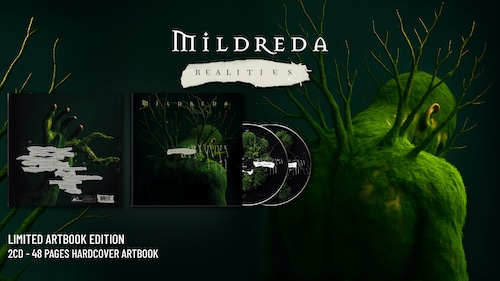
Following warm critical acclaim and enthusiastic fan reactions, Jan Dewulf, the mastermind behind Belgian dark electro project Mildreda, is back with his most ambitious work to date: the 18-track double album “Realities” on Dependent Records. Built as a continuous, immersive anti-streaming statement, the album ties personal grief, longing, and existential questions to the myth of Sisyphus – using eight atmospheric ”Reality Check” interludes to glue the sprawling story together. In this in-depth interview by Mikael Kahrle, editor-in-chief of Release Magazine, Dewulf opens up about processing internal setbacks, the creative process, collaborating with EBM heavyweights like Dirk Ivens, Numb and Leæther Strip, his other projects like Diskonnekted, and keeping his elaborate sound design at the forefront of the electro industrial scene today.
Enthusiastic reactions
It seems your new ambitious double album ”Realities” has been well-received and people really see all the hard work you have put in?
– I’ve indeed seen a lot of lovely and enthusiastic reactions, received many compliments directly from fans, and I’m very happy to have already read quite a few positive reviews. So yes, of course it’s extremely rewarding, after working long and hard on an album, to get that kind of confirmation that you’ve taken the right path, Jan Dewolf says.
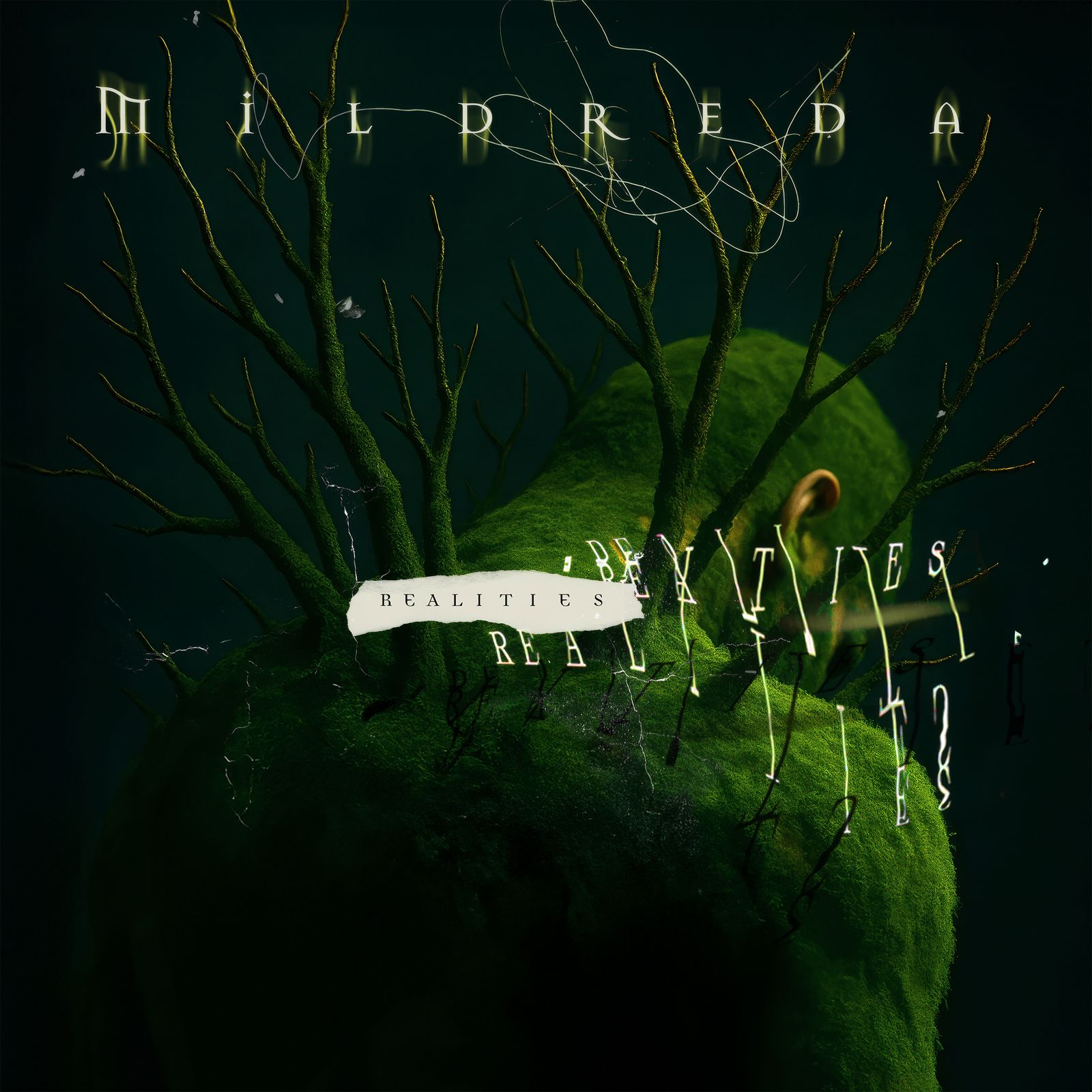
Please tell us about the ideas and themes behind the album and particular songs.
– A main theme usually only reveals itself once several pieces of the puzzle are already on the table. And I always love that moment when the bigger picture suddenly comes into focus.
There was some sadness I needed to process, and life itself still has a habit of getting under my skin. But I keep pushing forward. That constant cycle of falling down, getting back up and carrying on after setbacks eventually led me back to Sisyphus, a figure who had actually appeared in some of my earlier work as well.
He became the thread that could tie the songs together, and once that idea emerged, I stayed quite faithful to it. At the same time, every song still has its own story and needs to be strong enough to stand on its own. “Silk Skin” is about longing, “Clair-Obscur” about grief, there is anger inside “Faded”, and “End of the Line” deals with existential questions.
So, in the end, the album is a collection of different stories that all share a certain core.
At first, I thought 18 tracks were a bit much, but then I realised you have eight ”Reality Check” tracks before and in-between the full songs – tell us about those.
– The number of tracks really grew quite organically. That said, the idea of using interludes was there from the very beginning. I wanted them to act as a kind of glue between the songs.
We live in a time where, especially on streaming platforms, people tend to jump very quickly from one track to the next and the whole idea of an album as one experience has faded a little. I wanted to go against that current and still tell one continuous story, something that begins at the start and keeps flowing all the way to the finish line. The interludes were meant to help create that sense of movement.
At some point, though, I simply had too many pieces of the puzzle and the picture had become too large to squeeze onto one CD. That is how it eventually turned into a double album.
The “Reality Checks” are little adventures in themselves. Some are instrumental, some contain vocals. Some echo elements from one of the main songs, while others wander off into their own little world. The album has been out for a while now, and I really enjoy seeing that some of those “Reality Checks” are actually becoming favourites among listeners. I am glad people seem to experience the album as a journey of discovery rather than simply a collection of songs.
The album displays a wider palette, more vulnerable and more variation. Did you move outside your comfort zone with the vocals this time?
– I definitely didn’t want to repeat myself on this album, but there was never a masterplan for exactly where it should go. Once again, it all developed quite organically. At some point there is simply this need to get certain feelings out, to write those lyrics, and then to search for the sound that belongs with them. In that sense, the wider emotional range almost felt inevitable.
I have also grown a lot as a producer and songwriter over the past few years, which has made me less restrained in the way I work. It became easier to test boundaries, and sometimes to push beyond them. Allowing more colour, vulnerability and emotion into the music was definitely a challenge, especially while still making it fit within the dark electro palette. But that tension also made it a very interesting search.
My voice had to follow that broader emotional and musical palette as well. I wanted more variation in the vocals, which inevitably meant pushing myself beyond some of the things I normally feel comfortable doing. At times that was quite challenging, but it was also surprisingly liberating. It opened up possibilities I probably wouldn’t have explored otherwise.
Standing on the shoulders of giants
You have fine-tuned your own sound by now and we hear influences from Leæther Strip, Front Line Assembly, Nine Inch Nails, Front 242.
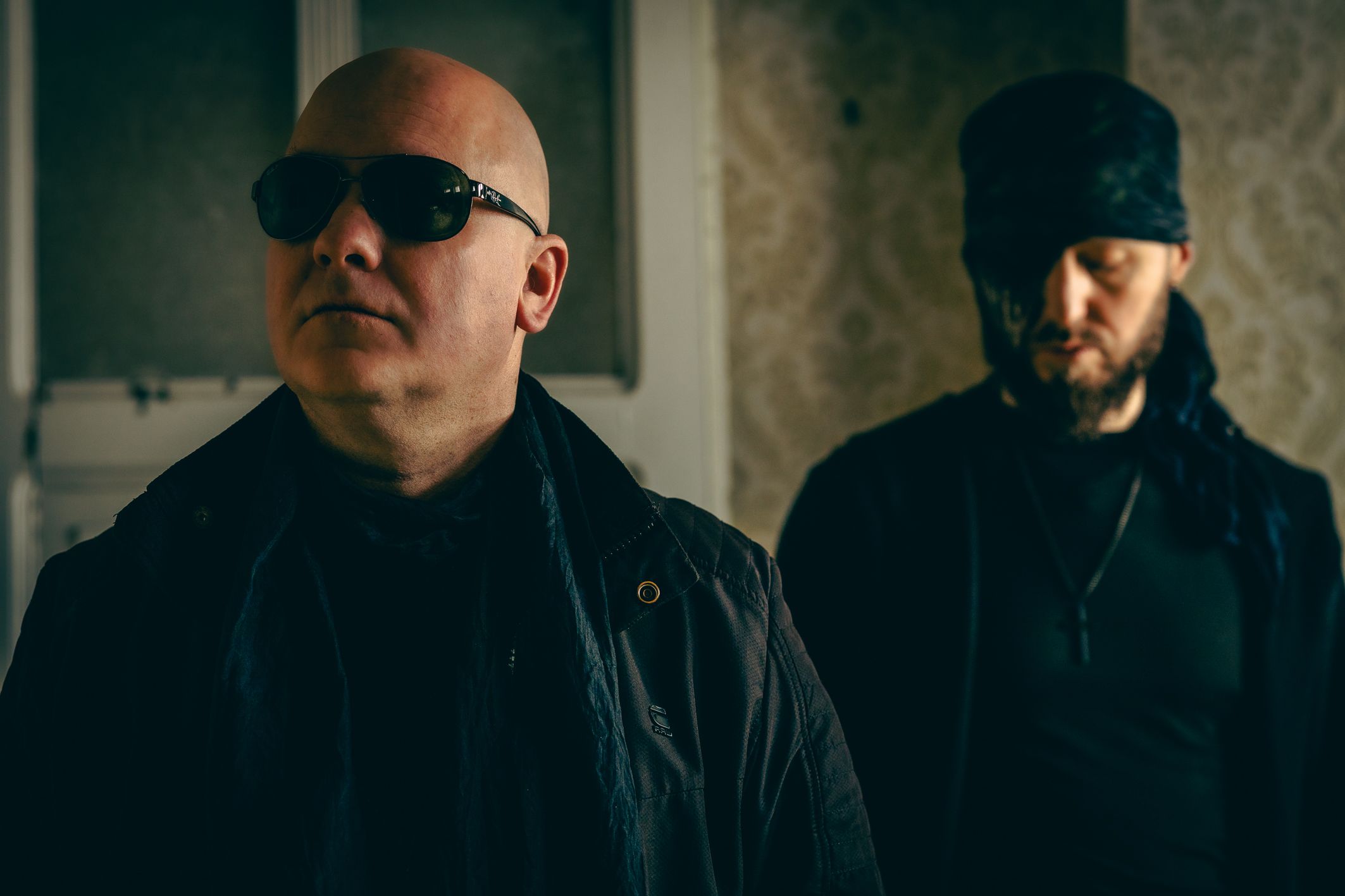
– Definitely, those are all artists that have left a very clear mark on me over the years. I stand on the shoulders of giants, but at the same time I do feel that, over the years, I have developed a sound of my own. I have found my own way of processing influences, and I have also built a solid foundation that I can keep developing from. Somewhere along the way, that turned into a recognisable Mildreda DNA. So yes, you mentioned some of the musical ancestors who helped shape that DNA, but by now I do feel the sound itself has become mine.
And there is much more in there as well, including influences from far outside the genre. I enjoy absorbing very different kinds of music and letting those elements find their way, sometimes almost subconsciously, into the ongoing search for my own sound.
You, Fix8:Sëd8 and 2nd Face are pushing the limits of electro industrial, especially when it comes to sound design – is there some kind of competition going on?
– I wouldn’t really call it competition, but I do think we keep each other sharp. Their productions are stunning, and over the years they’ve also become very good friends.
There’s something inspiring about hearing what the others are doing and thinking: wow, that raises the bar again. Not in a competitive sense, but in a way that makes you want to keep pushing your own sound further as well. More than anything, I simply enjoy the fact that we can carry the flag for dark electro together and represent the genre with a certain pride and confidence.
What are your future plans?
– I’m always working on something, but right now the main goal is to keep the fire burning around ”Realities”. There may still be another single – or perhaps even something else – and we hope to spend a lot of time on stage in 2027, bringing the new material to life.
We’ve just come back from the NCN festival, and that went incredibly well for us. The response was fantastic, so naturally that only made us even more eager to get back on stage as soon as possible.
There are always a few side projects and other things happening in the background, because I’m simply not very good at sitting still creatively.
25 years in the making
Why did it take 25 years to release your first physical Mildreda album? We’re told you halted Mildreda because you were feeling a bit disillusioned by the business side of the scene?
– There were a bunch of reasons, in fact. I was a bit bored with the dark and gothic stuff. It was around the turn of the century: the era of bands like Fluke, Underworld and Leftfield. Exciting things were happening for electronic music: big beats, drum & bass and tons of other new exciting genres. I wanted to make that kind of stuff myself. And I was getting frustrated because of not getting anywhere with Mildreda. Back then, it felt good to start afresh with my other project: Diskonnekted. The whole journey along my musical endeavours was one big learning process.
I think I needed the maturity before I was able to finally come home again with Mildreda. I need to believe in myself and my own songs to make the music really work. Now I’m finally there with Mildreda as well. For the first time, in fact, and this explains why things were postponed several times earlier on. On my first real physical album, I tell a true personal story and it’s the first time I do this with Mildreda. Roughly sketched, that story of Mildreda is dark and gloomy, about the delicate balance of a troubled soul, reflected in the dark and harsh music.
It seems you’ve managed to really impress the die-hard fans of the electro industrial scene.
– I was really thrilled to have my first album released by Dependent who helped me reach the right audience. Making a good album is not enough. It’s a jungle out there, and there’s so much music. Dependent helped connect with the electro-industrial scene.
Why did you name your project Mildreda?
– I started the project when I was 15. Back then I was obsessed with religion and everything that involved rituals, symbols and that kind of stuff. I stumbled upon Mildreda, the name of a saint. It seemed the perfect band name back then. At some point I hated the name, one of the many reasons I put the project on hold at some point. But now, I kind of like the band name again.
”How would Skinny Puppy have done this?”
Especially these days there’s a risk that electronic music sounds too clean and perfect. You have managed to do the opposite, which brings a dramatic nerve and tension to your tracks. Can you tell us how you achieve this harsher sound?
– Thanks for saying this. It’s a nice compliment. I feel the same way: industrial electro sounds too clean and almost soft nowadays. I guess because digital production allows us to mix things so solid and crystal clear, almost too easy and clean. I wanted to prevent that and thought ”How would Skinny Puppy have done this back in the eighties?”. I used modern equipment, of course, but without getting trapped in that perfect and clean sound. The aim was to sound dirty. And we did. It’s an approach more than it is an equipment thing.
Tracks like ”Opposite Choice” bear traces of British electronica, dance and rave scene from the 90s. Although this sound works well in an electro-industrial setting, it’s not that common with a fusion of these two worlds. Can you tell us a little about that?
– I love break beats. Big beats by Crystal Method or early Praga Khan: I really dig those beats. I believe FLA really managed to incorporate those kinds of beats on ”Flavour of the Weak” and the following remix album ”Re-wind”. I think they did a great job intermixing both worlds: big beats and modern dark electro. I guess I wanted to do the same thing here, but with my own twist.
What do you think sets Mildreda apart from the bands you are influenced by and similar bands on the scene?
– While we’re of course influenced by a lot of stuff, both some legendary bands and some more obscure stuff, I like to believe Mildreda has its own identity both musically and in terms of content. And there’s honesty in what we’re doing, and that makes us ”real”.
One can tell you have not finished your tracks prematurely because they are all well-crafted and detailed. Do you easily get stuck in the studio and when do you say ”I’m done” while working on a track?
– It might surprise you, but I don’t get lost into details anymore. While I used to spend hours on details back in the days, I just go with the flow. I was very inspired but worked quite quickly rather than twisting knobs for too long. You can lose hours in music theories but this time I just follow my gut feeling.
Is it easy or difficult for you to separate songs and song elements, making them different beings, so to speak?
– Each song is a new universe. Of course there’s some blueprint for a Mildreda song, but once things get real each song has its own battle and its own quest for sound. How things come together is always a new adventure. It’s quite unpredictable in fact.
Your soundscape is wide and spacious – how is this achieved? Many bands with a similar sound struggle with this, while others like you, Dead When I Found Her and Fix8:Sed8 nail it from day one.
– Thanks for the kind words. And I love the bands you mentioned. Great stuff. Speaking for myself, I know I like ambient, and I like to incorporate textural layers and space into my mixes. Again, it’s more of a musical approach than a mixing technique.
The break-up album
Can you tell us a little bit about the lyrics and themes of your 2021 album “I Was Never Really There” – disappointment, anger? Is it a break-up album even?
– I guess this was indeed a break-up album. I was very heartbroken when writing the album but on a good note, I was very inspired as well. Writing songs in general often feels like exorcising my demons, in fact. But while things are inspired by personal stuff, I of course don’t want the songs to be about me. I make sure the lyrics are universal so people can reflect with them and make the music and songs their own.
What can you say about the “Liaisons Dangereuses” and “Inner Judgement” videos from that era – ”the poisonous muse” and how they are connected to the lyrics?
– ”Liaisons Dangereuses” deals with that bitter feeling one can have after a failed relationship, realising things never got a chance from the start. It’s probably the main theme of that album, hence the album title ”I Was Never Really There”. An idea that is reflected in pretty much every album track one way or another.
The girl symbolises what I like to call the ”poisonous muse”: the dark muse that is throwing off her shadow on the whole album in fact. In the video you see the girl evolving from white to black. From good to evil, so to speak. But you can clearly see things were in fact venomous from the start.
The video was done by the production company Pigeon Eggs, with whom I already worked for a ”Your Life on Hold” video clip. They introduced me to Miss C who is featured in the clip, bringing the ”poisonous muse” to life. I like the dark and evil atmosphere they created, and I am truly flabbergasted by the performance of Miss C. The ”poisonous muse” is again present in the DIY music video for ”Inner Judgement”. She remains cool and impassive in the face of the anger and frustrations that push the song forward.
Working with Dirk Ivens, Don Gordon and Claus Larsen
When did you first meet Dirk Ivens – your ”muse”, according to your record label – and how did you start working together?
– It’s a small country and it’s a small scene, so artists meet quite easily. It seems from a previous life now, but I remember sending Dirk a demo of ”Frozen”, asking him if he’d like the idea of doing the vocals for that song. It went so well we decided to do the Diskonnekted vs. Dive EP together. But that’s already 15 years ago! We stayed in touch though, and we both felt there was some unfinished business, so at some point, I sent him a new demo, feeling his vocals would fit perfectly. And then, I made some more demos and before we knew it, we were working on a complete Dive album together.
How was it to produce his Dive album? I know he is a nice guy – how was he to work with?
– It went very smoothly, and we both felt very inspired during the process, and we became really good friends. So, inviting him as a guest for the Mildreda album felt like the right thing to do.
How did you bring Don Gordon from Numb on board?
– I’m inspired by the ”Vancouver sound” – Skinny Puppy and Front Line Assembly of course, but Numb has always been my favourite from that list. Numb taught me how to blend atmosphere with noise, and to make cold electronics sound organic. We got in touch when Don was remixing a Dive track, and we stayed connected after that. I believe we are like-minded souls when it comes to sound design – and a particular love for noise.
Claus Larsen mastered your first album excellently – what can you tell us about that, and did you know him from before?
– As for Claus, apart from being a fan, I had a chance to work with him earlier on a collaboration and I was very happy with the mastering job for that particular track. So, inviting him for the mastering seemed like the best thing to do.
Diskonnekted is disconnected
Can you introduce Diskonnekted to the readers and tell us the status of the project?
– Diskonnekted is dead. But I must admit Diskonnekted has been an interesting playground for me. I made some good stuff, but some less impressive things too. But the important thing is that throughout the years I became a better producer, a better musician, and a more mature artist. I became the artist that I am today, knowing what I want to achieve, tell, and create. While there was no plan when I started Diskonnekted, there is more of a masterplan today.
Can you tell us about your side projects?
– There are quite a few, in fact. Your Life on Hold being the most important one. At some point a few years ago I got a bit bored with all the knobs and buttons and wanted to create a more organic sound. This explains why I started the Your Life on Hold adventure. Driven by a ”burning” restlessness, Your Life on Hold is the melancholic but consoling soundtrack to a life of solitude and loss. The music expresses the inner torments when life gets stuck in sorrow and despair. But it also wants to comfort the troubled soul and soothe the consuming feeling of desolation. Working with guitars broadened my perspective even more, so now, the time has never been more right to restart Mildreda. Both have the same color: black. And both bands are equally important for me today.
And then there’s Dream Cycle Inc. under which I make all kinds of atmospheric and layered drum’n'bass, ambient and even some dub. You’ll find it on Spotify. And I’ve also been making some dark ambient tunes under the Mildred in Oblivion moniker for quite a while now, Mildreda’s dark little sister so to speak.
But at this point, there’s no doubt about it: Mildreda has absolute priority in my universe.